


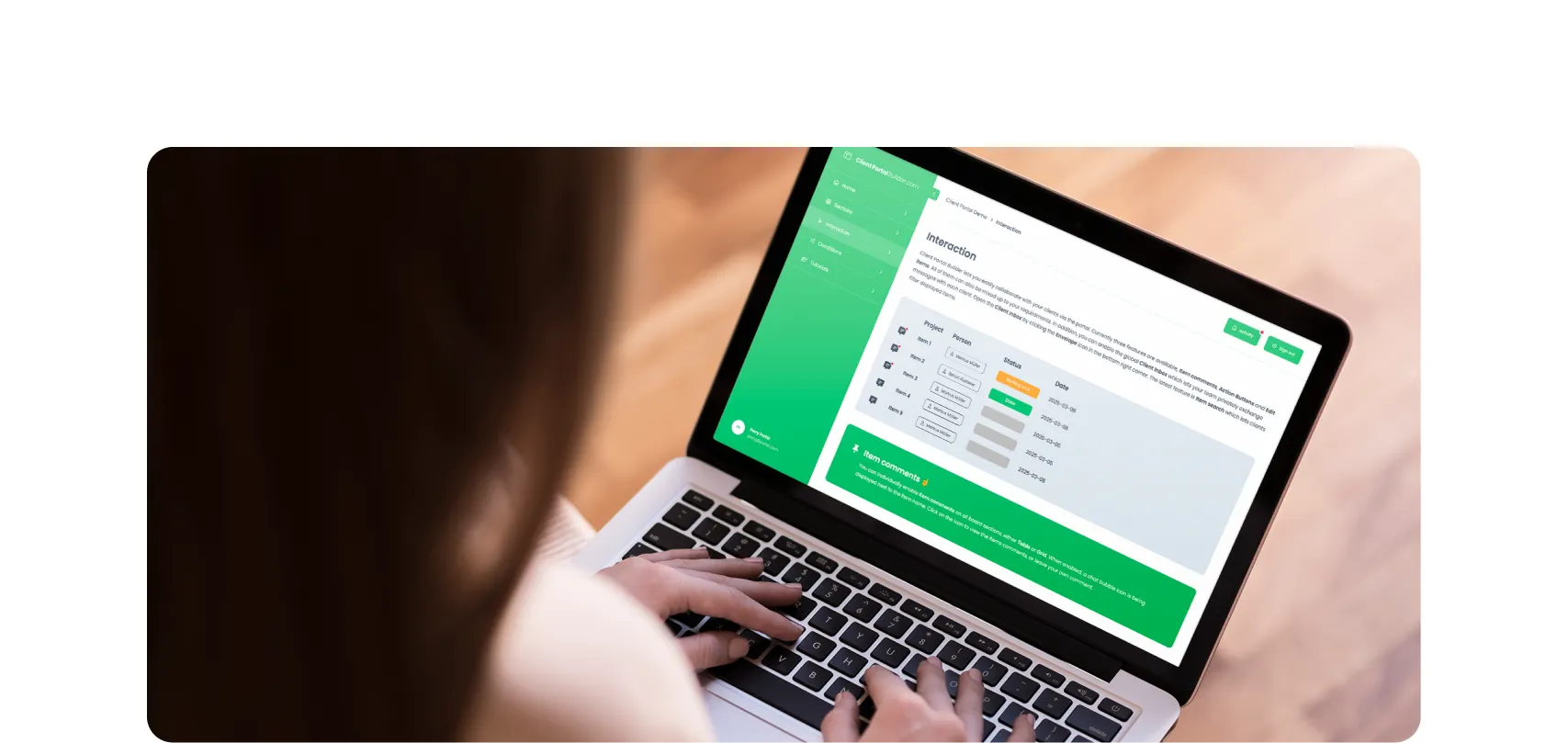
Build custom, structured Excel reports from monday.com board data and send them automatically to the right people on schedule.


How do I embed a monday.com board on my own website?
Are you looking for ways to embed your monday.com boards directly into your website? In this guide, we'll explore all the options of embedding a monday.com board seamlessly into websites.

Table of contents
Use the navigation to quickly jump to your desired section and learn more about the pros and cons for each option or head straight to the conclusion.
Embedding a monday.com board into your website allows you to publish board information without manually copying it into your website content management system. There are two main ways to embed a monday.com board into a website. You can use the native monday.com shared view feature for a quick and simple embed, or use Board to Website Widget when you need more control over the layout, branding, search, files, and mobile experience. In this guide, we explain how both options work, their advantages and limitations, and which method is best for your website.
TL;DR
What is the best way to embed a monday.com board into a website?
The best method depends on how the embedded monday.com board should look and what website visitors need to do.
- Use a native monday.com shared view when you need a quick public embed and the standard monday.com appearance is acceptable.
- Use Board to Website Widget when the embedded content should blend into your website with a dedicated layout, and support search and files.
- Use a client portal with monday.com instead when the information is private and should only be accessible to authenticated clients.
1. Embed with a shared view
How to embed a monday.com board using a shared view
monday.com allows board owners to publish a board or board view using a shareable link or iframe embed code. The embedded view can be opened by people who do not have a monday.com account. However, the content is published publicly and should not contain confidential information.
Follow these steps to embed a monday board
- Open the monday.com board or view you want to embed
- Click the
···button next to the view's name - Find and click
Share viewfrom the menu - The view is shared by default if it wasn't before
- Otherwise click
Startto start sharing the view - Copy the Embed code by clicking the
Copybutton - Paste the
iframeHTML snippet into your website - Publish and test the page with the embedded board
The embedded monday.com board or view will then look something like the example board shown below.
When a native monday.com embed works well
A native shared board view from monday.com is suitable when:
- You need to publish a board view quickly.
- The information is safe to share publicly.
- Visitors only need to view the board information.
- The standard monday.com appearance is acceptable.
- Custom branding, search, and files are not required.
- You want board changes to appear when the website visitor reloads the page.
Limitations of a native monday.com embed
The native sharing option is convenient, but it has several important limitations:
- Filtered items and hidden columns may still be accessible to technically experienced users.
- Files are not visible or downloadable in the shared view.
- Mirrored items are not displayed.
- Boards with active item viewing permissions cannot be shared publicly.
- The monday.com design cannot be fully customized.
- Board items cannot be searched by website visitors.
- The embedded layout offers limited flexibility on mobile devices.
- Large board views may take longer to load.
Create a searchable monday.com board for your website
Need more control than a native shared view provides? Publish selected monday.com board data on your website with search, filters, files, images and custom branding, without giving visitors access to your monday.com workspace.
2. Embed with Board to Website Widget
How to embed a monday.com board with Board to Website Widget
Board to Website Widget turns selected monday.com board items and columns into a dedicated website widget. You can choose a table, grid, or events layout, control which information is displayed, enable search, include files, apply filters, and customize the widget to match your website.
Follow these steps to create a website widget
- Install the Board to Website Widget for monday.com from the marketplace
- Add the Board to Website Widget app view next to its Main table
- Choose a layout, customize the look and feel, and add item filters
- Publish the widget manually by clicking
Publish - After publishing, copy the generated embed snippet
- Add a HTML, code, or embed element to the relevant website page
- Paste the widget snippet into the element and publish the page
- Test the embedded website widget on your website
- Create an automation on the board to publish on a schedule
The monday.com board converted into a table layout website widget will look something like the example widget shown below. View more examples and use cases of website widgets
When Board to Website Widget works well
Board to Website Widget may be the better option when:
- The widget should match your website branding.
- Visitors need to search the published board items.
- Files or images should be available to visitors.
- You need a custom table, grid, or events layout.
- The content should work well on mobile devices.
- You want to filter items independently from monday.com.
- Website content should continue to be managed inside monday.com.
- The widget should be republished automatically on a schedule.
Limitations of Board to Website Widget
Board to Website Widget provides more flexibility than the native shared view, but there are still some limitations to consider:
- Board changes are not published or reflected in real time.
- Widgets must be republished manually or an automation.
- Published widgets are intended for public information.
- Mirror columns are displayed as text rather than their original column type.
- Formula columns are supported with some technical limitations.
Each published widget represents a snapshot of the board at the time it was published. Changes appear after the widget is republished manually or by a scheduled automation.
What can you create from a monday.com board?
Board to Website Widget can be used whenever structured monday.com information needs to appear publicly on a website. These examples are among the current use cases supported by Board to Website Widget, but not limited to them:
Manage your products or services inside monday.com and publish them as a searchable grid or table. You can include product names, descriptions, categories, images, files, pricing information, and links.
Public product roadmaps
Publish planned, active, and completed product features from a monday.com board. Visitors can search the roadmap and follow the progress of individual features without accessing your monday.com workspace.
Feature request lists
Manage customer ideas and feature requests inside monday.com and display selected requests publicly. Filters can be used to exclude internal requests or items that are not ready to be published.
Event schedules
Create an events widget using board dates, descriptions, locations, speakers, registration links, and supporting files. The events layout can turn the board into a public conference, training, or company events schedule.
Team directories
Manage team members inside monday.com and display their names, roles, departments, profile images, and contact details on your website.
Location and showroom listings
Display offices, stores, partners, showrooms, or service locations from a monday.com board. Visitors can search or browse the locations using a structured website widget.
Resource libraries
Publish guides, documents, videos, templates, and other resources managed in monday.com. Files from a monday.com Files Column can be made accessible through the widget.
Real estate listings
Manage property information in monday.com and publish selected listings on your website. A grid layout can display property images, locations, prices, availability, and links to further information.
Press releases and newsrooms
Manage company announcements inside monday.com and publish them as a structured press release or newsroom section.
3. Embed into a client portal
What should you use for private monday.com information?
Neither a native public shared view nor Board to Website Widget should be used to publish confidential information. Both options are intended to make selected board information publicly accessible without requiring visitors to sign in to monday.com. Use Client Portal Builder instead when:
- Each client should sign in before accessing information.
- Different clients should see different board items.
- Files or project information are confidential.
- Clients need to comment or edit selected information.
- You need controlled and personalized access.
- The portal should use your own branding and domain.
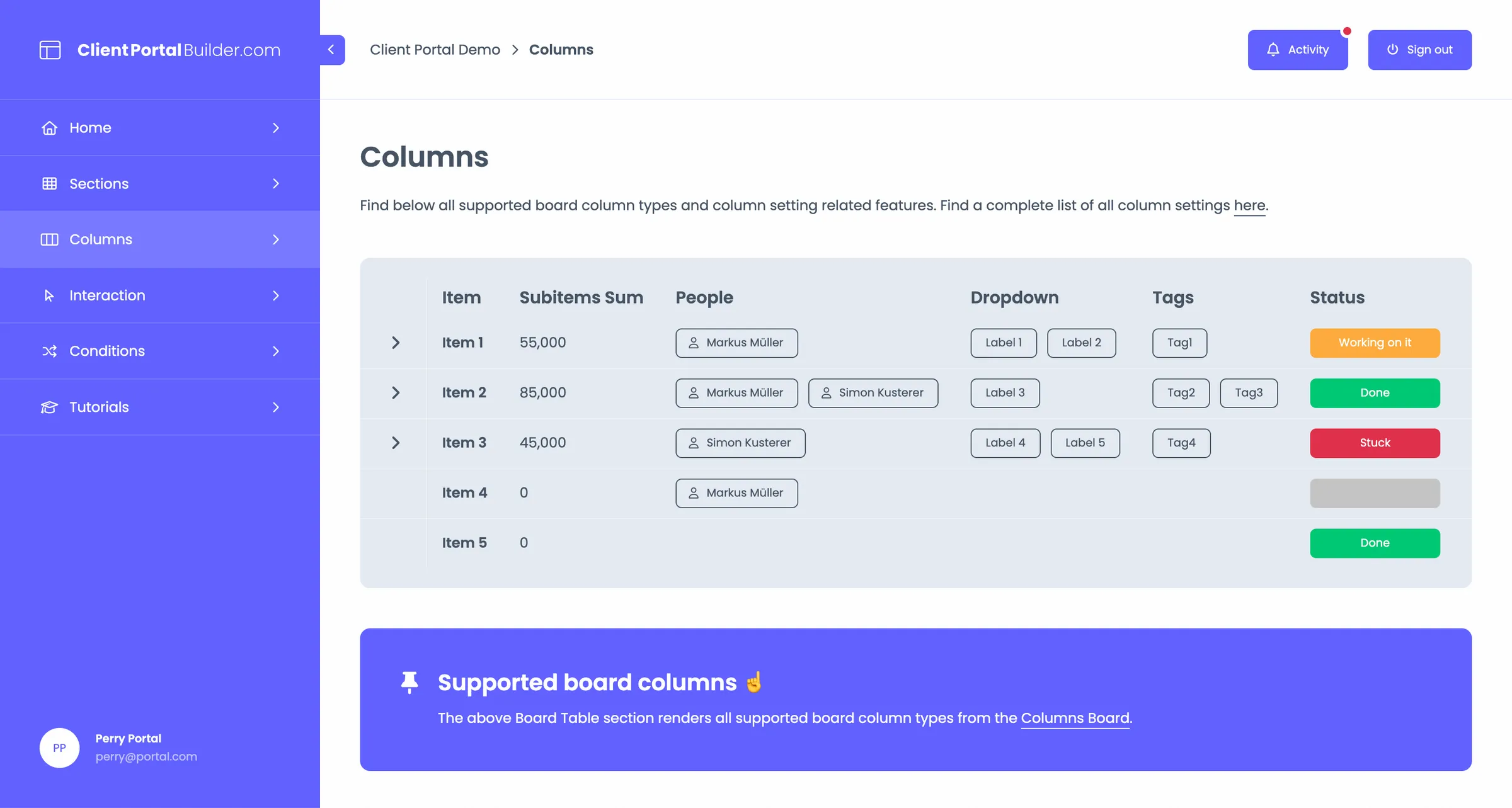
Client Portal Builder creates a separate authenticated space connected to the monday.com boards your internal team already uses. Learn more about Client Portal Builder for monday.com
Compare embed options
Native shared view or Board to Website Widget?
Both options allow you to display monday.com board information on a website, but they are designed for different requirements.
| Requirement | Native shared board view | Board to Website Widget |
| Visibility of board changes | Browser reload | Automations |
| Embed board into website | Yes | Yes |
| Subitem support | Yes | Yes |
| Mirror column support | No | Yes |
| Custom colors and fonts | No | Yes |
| Custom layouts | No | Yes |
| Searchable board items | No | Yes |
| File and image access | No | Yes |
| Mobile friendly layout | No | Yes |
| Suitable for private data | No | No |
| Best use case | Basic public board sharing | Branded website content |
Choose the native shared board view when you only need to display a basic board or view and do not need extensive design control. Choose Board to Website Widget when the board should feel like part of your website rather than an embedded monday.com interface.
Questions & Answers
Frequently asked questions about embedding monday.com boards into external websites
Can you embed a monday.com board on a website?
Yes. A board owner can publish a board or board view and copy the iframe from the monday.com sharing settings. You can also use Board to Website Widget to create a more customizable website embed.
How do I get the embed code for a monday.com board?
Open the relevant board view, select the three dot menu beside the view name, and select Share view. Copy the iframe from the Embed code section and paste it into your website.
Do website visitors need a monday.com account?
No. Visitors can view a public shared view or published Board to Website Widget without signing in to monday.com.
Can website visitors edit an embedded monday.com board?
No. Public board embeds are intended for displaying information rather than allowing visitors to edit the underlying board. Use a client portal when external users should securely interact with selected monday.com information.
Is an embedded monday.com board public?
Yes. Anyone who can access the website page or public share link may be able to view the published information. Do not include confidential information in a public board embed.
Can filtered monday.com data still be accessed?
Filtered items and hidden columns in a native monday.com shared view may still be accessible to technically experienced users. Filters should not be treated as a security measure. Board to Website Widget does only publish columns and content that is meant for public sharing.
Can I embed files and images from monday.com?
Files in a Files column are not available through the native monday.com shared view. Board to Website Widget supports files and images from monday.com board columns.
Does an embedded monday.com board update automatically?
A native shared view displays current board information when the website page is reloaded. Board to Website Widget displays the information from its most recent publication. You can republish it manually or use a monday.com automation to publish it on a schedule.
Can I customize the colors of an embedded monday.com board?
The native monday.com shared view provides limited control over its appearance. Board to Website Widget allows you to customize colors, fonts, labels, and layout settings to match your website.
Which layouts are available with Board to Website Widget?
Board to Website Widget provides table, grid, and events layouts. Each layout includes its own configuration options for displaying board items and columns.
Can I embed a private monday.com board?
Publishing a board through a shared view or website widget makes the selected information publicly accessible. Use Client Portal Builder when you need authenticated and personalized access to private board information.
Can I embed a monday.com board in WordPress, Wix, Squarespace, or Webflow?
Yes. Each of these website builders provides a code or embed element where you can paste the generated iframe or widget snippet.
Embedding the iframe
How to add the embed code to your website
Both the native monday.com iframe and the Board to Website Widget snippet need to be placed inside a website element that accepts custom code. The embed snippet can also be used with other website platforms that support iframe or custom HTML content. Read the complete embedding guide for WordPress, Squarespace, Wix, and Webflow
Conclusion
Which embedding option should you choose?
Use the built-in and native monday.com shared view when you need a quick public embed and do not require custom branding, files, search, or a dedicated and mobile-ready layout.
Use Board to Website Widget when you want to turn monday.com board data into website content that matches your branding and is easier for visitors to browse. Your team can continue managing products, events, listings, directories, resources, roadmaps, and other information inside monday.com. The selected content can then be published as a searchable website widget without maintaining the same data in two separate systems.
Use Client Portal Builder for monday.com instead when the information is confidential or different users should receive personalized access.
Interested in a product demo?
Let's learn about your requirements, answer questions, and
review ways how we can help you and your organization with
our monday.com apps and solutions.
